


The Hidden Tax Tourists Encounter on Japanese Hotel Bills
The quoted cost of a hotel room may appear quite simple when booking a hotel room in Japan, however, when it comes to most foreigners, they will be surprised to find out that there is an extra fee that will be added to the front desk of the hotel: the local accommodation tax.. This is factual, concrete and something that must be known by every traveler regardless of whether you are in a low-end business hotel in Tokyo or are on a spur in a luxury ryokan in Kyoto.
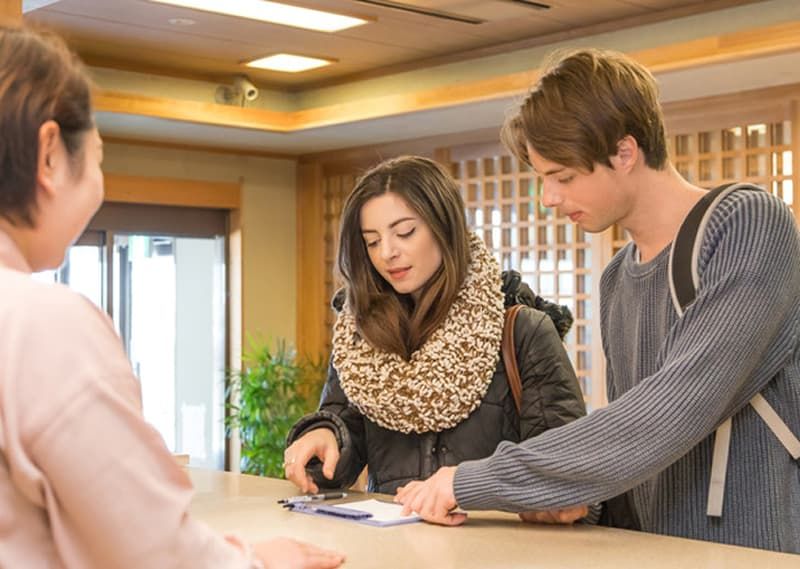
In Tokyo, in the main Tokyo region, the local government charges an accommodation tax based on the amount of the night charge per-capita. When your night rate is less than 10,000 yen, then no tax is levied. However, in case it costs between 10000 and 15000 yen, you will pay an additional 100 yen per head per night; and over 15000 yen, the price will be 200 yen. It may come as a surprise if one arrives expecting just the room rate and finds the tax only at check-in or check-out.
Similar rules apply in other Japanese cities. In Kyoto City, in accommodations that cost less than 20,000 per person per night, the accommodation tax is 200; between 20,000 and 50,000, the tax is 500; above 50,000 the tax is 1,000, although the city has proposed raising the tax to ultra-premium accommodation up to 10,000 per person per night. At the same time in Osaka, guests are not charged a fee below 10,000 yen, 100 between 10,000 and 15,000 yen, and 200 between 15,000 and 20,000 yen, with 300 above 20,000. These regional variations illustrate how cities have taken the accommodation tax seriously as a way to fund public services, visitor infrastructure and even overtourism counter-measures.
Here's the catch for tourists: when you book a hotel online from abroad, the published rate might or might not include this tax. Most hotel booking platforms show only the room rate plus national consumption tax (10 %), but not the local accommodation tax, which the hotel then collects at check-in or check-out. One traveler on a forum reported finding a booking on Rakuten that had included the 10 % consumption tax, but still required "200 yen (per night per person) accommodation tax" to be paid separately. Because the fee is generally small (¥100–¥500 in many cases), it often attracts minimal attention—but that doesn't mean it's insignificant, especially on multi-night stays or when booked for several guests.
It's also important to know this tax is assessed per person, not per room in many cases. Often, Japan's hotel pricing logic is per person, rather than the rate per room. As one recent traveler noted, the rate jumps when you change the guest count from one to two-even if the room is the same-because services, bedding, meals, and amenities are accounted for per individual. So when an accommodation tax is charged "per person", the total bill may be more than expected in ways that might confuse visitors accustomed to booking "per room" at a fixed price.
Another nuance: the accommodation tax is distinct from the national consumption tax, and also distinct from any service charge. The consumption tax (10 %) is usually already included or clearly stated in the room rate. The accommodation tax is a local-government levy and often shows up as a separate line item. In some inns or hot-spring resorts (onsen ryokan), other tiny levies, such as a “bathing tax”, may also appear, sometimes only ¥100 per person, depending on the local jurisdiction.
What can a traveler do to escape surprises then? To begin with, you must look at the terms on the booking page when you book your room online as this may say something like accommodation tax not included or local tax to be collected at hotel. Second, add up all your expenses by multiplying the tax charge per person by the number of guests and nights. Third, be advised to call the front desk or booking office of the hotel of which you are staying to clarify whether that tax is already included in the price quoted or whether it will be paid separately. Lastly, when you see a rate that sounds too good to be true, such as, 9,000 per person per night in Tokyo but you are sharing the room, check to make sure that the rate is per one or two guests since any price per person can vary.
 Disclaimer:
The content provided on our blog site traverses numerous categories, offering readers valuable and practical information. Readers can use the editorial team’s research and data to gain more insights into their topics of interest. However, they are requested not to treat the articles as conclusive. The website team cannot be held responsible for differences in data or inaccuracies found across other platforms. Please also note that the site might also miss out on various schemes and offers available that the readers may find more beneficial than the ones we cover.
Featured Articles
-
 Finance
Do You Really Need a Bitcoin Credit Card?
-
 Travel
Insider Strategies to Unlock Last-Minute Flight Deals
-
 Health & Wellness
How to Choose the Right Dental Insurance and What Are They
-
 Automotive
Regular Oil Changes to Give Your Ride a Kickstart
-
 Health & Wellness
Cupping Therapy Demystified: Ancient Suction and the Evidence Behind Modern Pain Relief
-
 Finance
PayPal’s New “Pay With Crypto” Marks the Beginning of a Borderless Payment Age