


Why Runners Suffer Shin Pain and How to Escape the Cycle
Your shins throb with each footfall during your morning run. By mile two, the familiar dull ache transforms into burning pain that forces you to walk. This isn't weakness or lack of fitness—it's a biomechanical breakdown happening at the cellular level of your tibia, the shinbone bearing thousands of impacts every run.
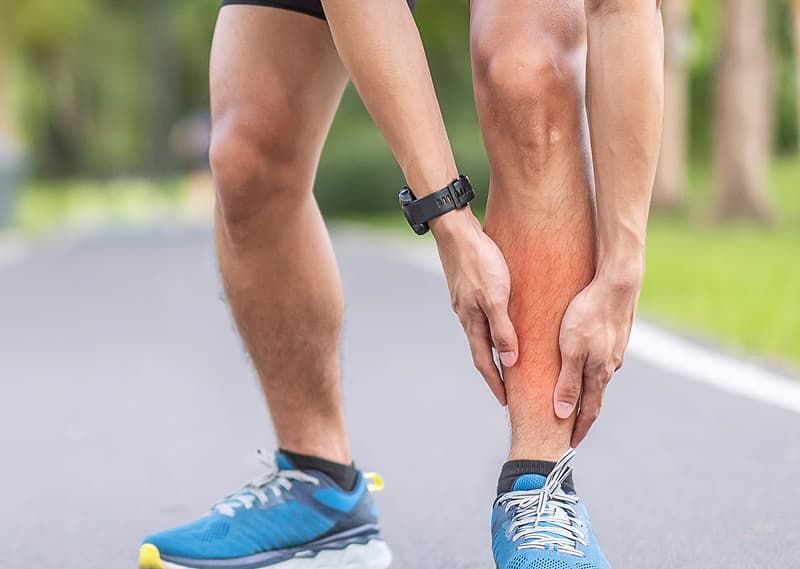
Shin splints, medically termed medial tibial stress syndrome (MTSS), occurs when repetitive forces exceed your body's repair capacity. Each footstrike sends shock through your shinbone's periosteum—the thin, pain-sensitive membrane covering the bone. At the same time, tibialis anterior and posterior muscles are overworked as the stabilizers. In the long run, mechanical stress and muscular strain cause inflammation on the points of attachment, microscopic damage to the periosteum and in severe cases, actual stress fractures in the tibia itself.
The root cause often traces back to how your foot meets the ground. Heel strikers place themselves at particular risk. When you land heel-first, your foot must rapidly curl upward as you transition to your toes—a motion requiring intense, prolonged contraction of the anterior tibialis muscle. Research from the British Journal of Sports Medicine documented that the farther back on your heel you strike, the harder your forefoot slaps against the ground immediately afterward. This audible slapping represents exactly what damages your shins: repeated, violent contractions of a muscle designed to lift your foot during walking, not absorb ground reaction forces during running.
Overpronation amplifies shin stress considerably. When your foot rolls inward excessively after landing, your tibialis posterior muscle—responsible for decelerating foot collapse—must work eccentrically under extreme tension. Eccentric contractions inherently create microscopic tears as muscles lengthen under load. Without adequate strength, they lead directly to tendon irritation and shin pain. Weak hip abductors and glutes accelerate this cascade by allowing excessive knee valgus—that inward knee collapsing that propagates abnormal rotational forces down your kinetic chain directly to your shins.
Training errors compound these biomechanical vulnerabilities significantly. Increasing weekly mileage beyond the scientifically established 10 percent threshold overwhelms your bones' adaptive capacity. Running exclusively on hard surfaces like concrete provides no shock absorption. Hill training dramatically increases load on your anterior tibialis as your muscles fight constantly to control downhill deceleration. Insufficient recovery time prevents tissue repair, transforming manageable stress into cumulative damage.
Amazingly, the use of shoes that have large cushions can significantly aggravate the situation. Too much cushioning deadens proprioceptive information in your feet the 200,000 nerve endings that tell your brain when you hit the ground. In the absence of such feedback, you will subconsciously strike harder and more at the heel without ever experiencing the effect until several weeks later with inflammation.
Recovery requires addressing both acute inflammation and underlying mechanical dysfunction carefully. The acute phase demands relative rest, not immobilization. Swimming and stationary cycling maintain fitness without loading your shins. Ice applied for fifteen to twenty minutes immediately after activity reduces inflammation effectively. NSAIDs are only pain killers that do not solve underlying issues.
Having a proper biomechanical deficit that ought to be addressed by targeted strengthening is the only way people will heal. Balance exercises on one leg involve the use of stabilizing muscles along your kinetic chain. The exercise of the foot screws is the exercise of the intrinsic foot strength: support yourself on both feet, turn your backfoot outward not to lift your big toe, and hold the position in order to get the heels somewhat higher, then turn your backfoot inward slowly. It is this very movement that re-trains the eccentric control of your tibialis anterior. Shoulder presses using light weights and one leg unstable your shoulder, causing your foot muscles to work to their fullest capabilities, which is what you need to have neuromuscular control to comfortably run.
Switching your running stance to midfoot strike spreads the load over your calf and Achilles tendon -structures that have been developed to efficiently transmit and give back energy. Once your foot is underneath your body instead of in front you are doing away with the driving force of braking that goes in a direction towards your shins. When followed with progressive strengthening and gradual increases in the mileage after the 10 percent rule, this one change alone solves the shin splints in most runners in six weeks. The pain that felt permanent transforms into a completely preventable problem.
 Disclaimer:
The content provided on our blog site traverses numerous categories, offering readers valuable and practical information. Readers can use the editorial team’s research and data to gain more insights into their topics of interest. However, they are requested not to treat the articles as conclusive. The website team cannot be held responsible for differences in data or inaccuracies found across other platforms. Please also note that the site might also miss out on various schemes and offers available that the readers may find more beneficial than the ones we cover.
Featured Articles
-
 Finance
The Power and Need for High- Yield Savings Accounts
-
 Health & Wellness
Understand and Tame Tinnitus When Your Ears Just Won’t Stop Ringing
-
 Travel
5 Affordable South American Destinations Worth Your Money
-
 Finance
Five Good Reasons to Invest in Renter’s Insurance
-
 Finance
Top 5 Best Cash-Back Business Credit Cards to Maximize Your Rewards in 2025
-
 Finance
Volkswagen Dethrones Amazon as Rivian's Top Investor